

Nurturing Legal Minds, Strengthening the Republic
As India celebrates 77th Constitution Day on November 26, the occasion is an opportunity to reflect not merely on the adoption of the country's supreme legal document but also on the responsibility of educational institutions to nurture a generation of legal professionals who understand its spirit, uphold its values and strengthen the institutions of democracy.
Dr SC Vats|

November 26 occupies a place of extraordinary significance in India's constitutional history. Observed as Constitution Day, or Samvidhan Divas, the date commemorates the adoption of the Constitution of India by the Constituent Assembly in 1949. Although the Constitution came into force on January 26, 1950, marking the birth of the Republic, November 26 remains a reminder of the remarkable intellectual exercise through which a newly independent nation gave itself a framework for governance, justice and citizenship.
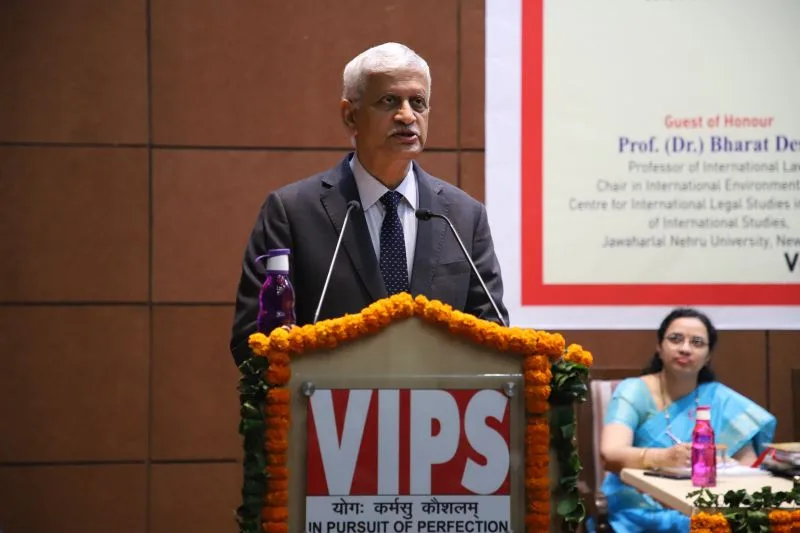
The Indian Republic derives its authority, legitimacy and institutional strength from the Constitution. Every organ of the state, whether the legislature, the executive or the judiciary, functions within the framework it establishes. The rights enjoyed by citizens, the responsibilities of the government, the distribution of powers between the Centre and the states, and the independence of the judiciary all find their foundation in this document. In that sense, the Constitution is not merely a collection of articles and provisions; it is the covenant that binds the Indian state and its citizens.
However, the strength of a Constitution does not rest solely on the wisdom of its framers or the elegance of its provisions. It depends equally on the people entrusted with interpreting, implementing and defending it. This is where legal education assumes a significance that extends far beyond the confines of academic instruction.
At the Vivekananda Institute of Professional Studies–Technical Campus (VIPS-TC), the imparting of legal education has been an integral part of the institution's journey for more than a quarter of a century. Through the Vivekananda School of Law and Legal Studies, the endeavour has been to prepare students for the diverse professional avenues that a legal education opens up. These include the Bar, the Bench, the corporate sector, academia, public service and even the armed forces, where an understanding of law is essential to the discharge of institutional responsibilities.
The institution's approach to legal education recognises that learning the law and understanding the law are two different dimensions of legal scholarship. Familiarity with statutes, sections, precedents and constitutional provisions provides the necessary foundation. But the ability to interpret these provisions, appreciate their context, understand their implications and apply them to real-life situations is what distinguishes a competent legal professional.
A lawyer is not merely expected to know the law but to interpret it in the interests of justice. A judge must go beyond the literal understanding of statutory provisions to appreciate their constitutional implications. A corporate legal professional must understand how legal principles intersect with commercial realities, while an academic must be able to examine established jurisprudence and encourage fresh perspectives. Each of these roles demands analytical ability, intellectual integrity and a firm grounding in constitutional values.
Consequently, legal education cannot remain confined to textbooks, lecture halls and examinations. It must provide students with opportunities to engage with the practical functioning of the legal system. Moot court exercises, legal aid initiatives, internships, research assignments, case analysis, debates and interaction with members of the Bar and Bench become essential components of this learning process. Such exposure enables students to appreciate the complexities of legal practice and prepares them to confront situations where the application of law is rarely as straightforward as its theoretical understanding.
At VIPS-TC, this emphasis on experiential learning is accompanied by an institutional philosophy inspired by Swami Vivekananda, the guardian saint of the institute. His teachings on character, fearlessness, service and the pursuit of truth offer a valuable framework for legal education.
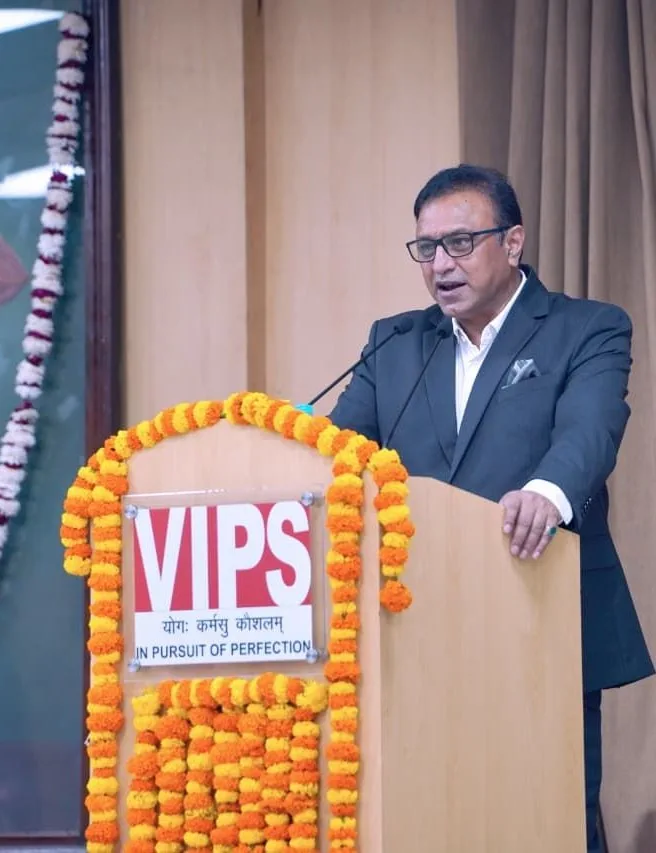
Vivekananda believed that education must contribute to the making of character and the development of individuals capable of serving society. This philosophy finds a natural resonance in the legal profession. The practice of law requires courage to stand up for justice, integrity to resist expediency and compassion to understand the circumstances of those seeking legal remedies. The courtroom is not merely a place where competing arguments are presented; it is an institution where the rights, dignity and aspirations of individuals are protected.
The ideals of Swami Vivekananda also reinforce the importance of professional ethics. A technically accomplished lawyer without integrity can undermine public confidence in the justice delivery system. Similarly, judicial authority acquires legitimacy not merely through the power vested in the office but through impartiality, fairness and the ability to inspire public confidence. Legal education must therefore strive to produce professionals who understand that the authority of law ultimately rests on the trust people repose in its institutions.
The scale of this responsibility is reflected in the institution's contribution to legal education, with more than 500 law students graduating every year. These young professionals carry their learning into courtrooms, corporate offices, academic institutions and other fields where legal understanding shapes decisions and influences society. Their professional journeys represent an extension of the institution's commitment to strengthening the rule of law.
Constitution Day also presents an opportunity to reflect on the challenges confronting the contemporary legal system. The growing complexity of commercial transactions, the expanding dimensions of individual liberty, questions surrounding privacy and technology, and the emergence of artificial intelligence are creating new areas of legal inquiry. At the same time, the country continues to grapple with issues of access to justice, delays in adjudication, legal awareness and the need to make the justice delivery system more responsive to ordinary citizens.
The next generation of legal professionals will have to navigate these challenges without losing sight of the constitutional principles that form the foundation of their profession. They must be technologically competent but not technologically dependent, professionally ambitious but ethically grounded, and intellectually confident without becoming indifferent to the larger purpose of justice.
On Constitution Day, the most meaningful tribute to the framers of our Constitution would be to ensure that its ideals remain alive in our institutions and in the conduct of those who serve them. For institutions engaged in legal education, this responsibility is even greater. The task is not simply to produce graduates who know the law, but to nurture professionals who understand that the ultimate purpose of law is to secure justice.
Inspired by Swami Vivekananda's vision of character-building through education, this remains the enduring commitment of legal education at VIPS-TC: to prepare a generation that does not merely practise law, but strengthens the constitutional promise of the Indian Republic.
The writer, Dr SC Vats, is founder-chairman, Vivekananda Institute of Professional Studies – Technical Campus, New Delhi.